The Sacred Journeys of the Supreme Buddha in Sri Lanka
Dīpavaṃsa · Belong to 3rd and 4th centuries (Historical Book)
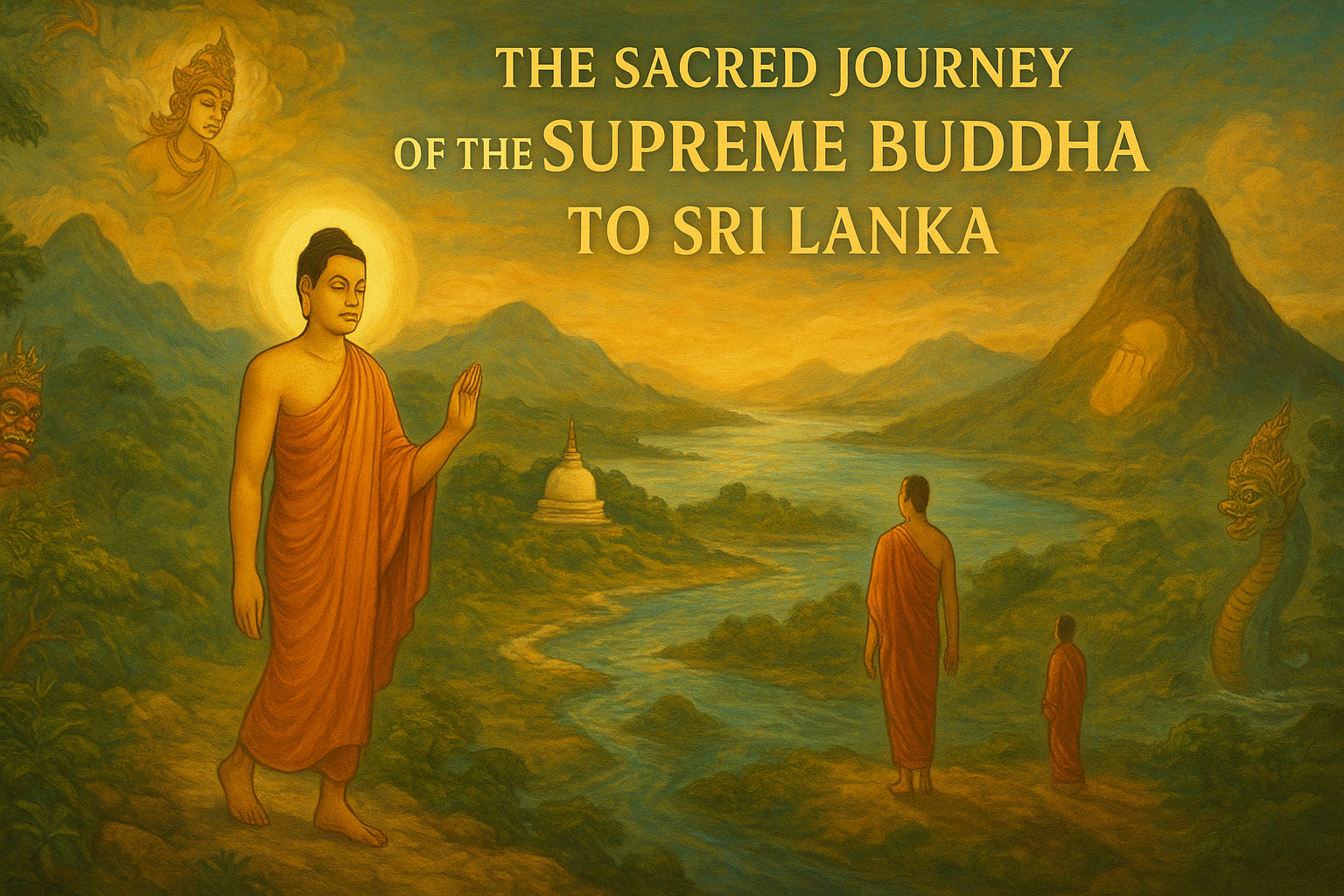
The Sacred Journeys of the Supreme Buddha: From Mahiyanganaya to Adam’s Peak, Blessing the Land of Lanka, Driving Away Yakshas, Dewas, and Nagas, and Giving Life to Rivers That Nourish the Island Forever...
Long ago, before humans walked upon the land of Lanka, the island was a wild and mystical realm, inhabited by powerful tribes of Yaksha, Dewa, and Naga. These were no ordinary beings—Yakshas were fierce demons, Dewas were divine celestial beings, and Nagas were serpentine guardians of rivers and treasures. The land was alive with magic, yet untamed and full of mystery.
It was during this ancient time that the Supreme Buddha visited Sri Lanka, not once but several times, bringing peace, wisdom, and blessings to the sacred island. His first steps were upon Mahiyanganaya, where the mountains kissed the clouds and rivers began to sing. The Yakshas and other mystical tribes, sensing the purity and power of his presence, fled in fear to the distant Giri Islands, leaving the land peaceful and ready to receive the Buddha’s blessings.
From Mahiyanganaya, the Supreme Buddha traveled to Nagadeepa, a sacred island where his teachings illuminated even the darkest corners of the realm. He then journeyed to Kalani, Digawapi, and Muthiyangana, sanctifying each place with his wisdom and compassion. The land, once wild and untamed, began to thrive under his divine influence.
The pinnacle of his sacred journeys was at Adam’s Peak (Sri Pada), a majestic mountain that pierces the sky. Here, the Supreme Buddha left his divine footprint, a symbol of protection and spiritual power. From this sacred mountain, countless rivers began their journey, flowing through the island to nourish the land, the forests, and the creatures that would later walk upon it. These rivers became the lifeblood of Lanka, feeding the soil, sustaining the jungles, and giving birth to fertile plains.
Thus, through his travels, the Supreme Buddha transformed Sri Lanka from a mystical land of demons and gods into a sacred realm blessed with rivers, mountains, and spiritual power. His footprints on Adam’s Peak still watch over the island, a lasting promise of protection, purity, and enlightenment.
Even today, the sacred rivers that flow from Adam’s Peak carry his blessing, and the lands of Mahiyanganaya, Nagadeepa, Kalani, Digawapi, and Muthiyangana remain eternal witnesses to the journeys of the Supreme Buddha—when the divine touched the wild, and the island of Lanka became a sanctuary of life and wisdom.
The Legend of Prince Vijaya — The Lion-Blooded King
Mahawamsa · By Monk. Mahanama (Historicle Book)
There are groupe of people from india they cold Arya. Prnce belong to lion royal family...
Long ago, in the land of Sinhapura in India, there ruled a mighty king named Sinha Bahu and his noble queen Sinha Siwali.
The word Sinha means Lion, and their royal blood was said to come from a line of lion-hearted rulers — brave, powerful, and proud.
Among their children was Prince Vijaya, the eldest son, who was strong in body and fearless in spirit. Yet, his restless nature often led him into trouble, and the people of the land feared his wild temper. At last, King Sinha Bahu decided to send Vijaya and his followers away — to find a new land and create a new kingdom.
Before their departure, wise Buddhist monks blessed the prince. They tied a sacred thread upon his wrist, whispering verses from the Truth of the Buddha’s Dhamma.
“This thread shall protect you, O Prince,” the monks said.
“No darkness, no demon, nor deceit shall harm you — for truth is your shield.”
With that blessing, Prince Vijaya and five hundred loyal companions set sail from India, across the mighty sea.
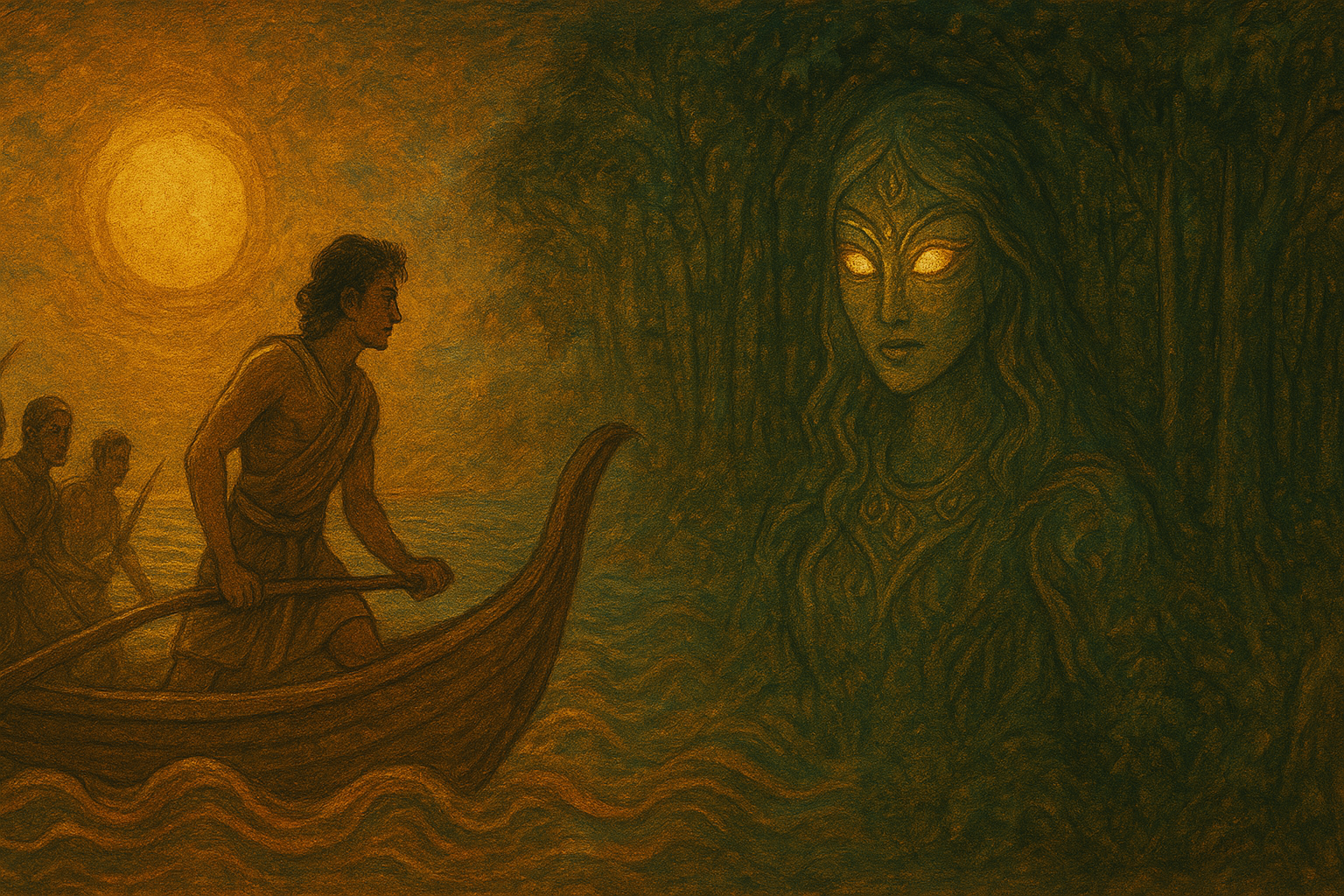
After a long journey through storm and wind, they finally reached the golden shores of Lanka, a mysterious island shrouded in mist and silence.
But this land was not yet ruled by men. It was the realm of Yakkhas — fierce demons who dwelt in forests and caves.
One day, as Vijaya and his men explored the island, they saw a strange sight by a riverbank — a beautiful woman, dressed in red, washing clothes.
Her name was Kuveni, queen of the Yakkhas.
When Vijaya approached, she tried to deceive him, planning to trap his men. But the sacred thread of truth shone upon the prince’s wrist, and her magic failed. Realizing his divine protection, Kuveni bowed before Vijaya and said:
“You are no ordinary man. The gods have sent you here. I will no longer be your enemy — I will help you rule this land.”
Thus, Prince Vijaya and Kuveni joined hands in peace. Together they built a fortress and founded the first human settlement in Sri Lanka. Soon, Kuveni bore him two children — a son and a daughter.
But as years passed, Vijaya remembered the royal customs of his ancestors.
A king, he thought, must marry a queen of noble birth, and his heir must come from a royal lineage.
So, he sent messengers back to India to seek a princess, and soon a royal bride arrived. Vijaya married her according to tradition — yet the new queen bore no children.
Heartbroken and bound by duty, Vijaya could no longer protect Kuveni and their two children. Fearing the anger of the new queen and her court, Kuveni fled into the jungle with her son and daughter.
There, deep within the forests, her children grew up hidden from the world. As time passed, they married each other — for no other humans lived there — and from them descended a new people:
the Veddas, the first aboriginal inhabitants of Sri Lanka, guardians of the jungle and keepers of the ancient bloodline.
Thus began the tale of Prince Vijaya, the Lion-Blooded King, whose journey from India brought the dawn of the Sinhala people and the birth of a new kingdom — Sri Lanka.
The Brave Resistance of Wellasse Karalla: Sinhalese Warriors Against British Rule
Uva-Wellassa Rebellion of 1817–1818,
Here’s a historical story-style narrative based on your description about Wellasse Karalla and the Sinhalese resistance using Angam and Ilangam...
The Brave Resistance of Wellasse Karalla: Sinhalese Warriors Against British Rule
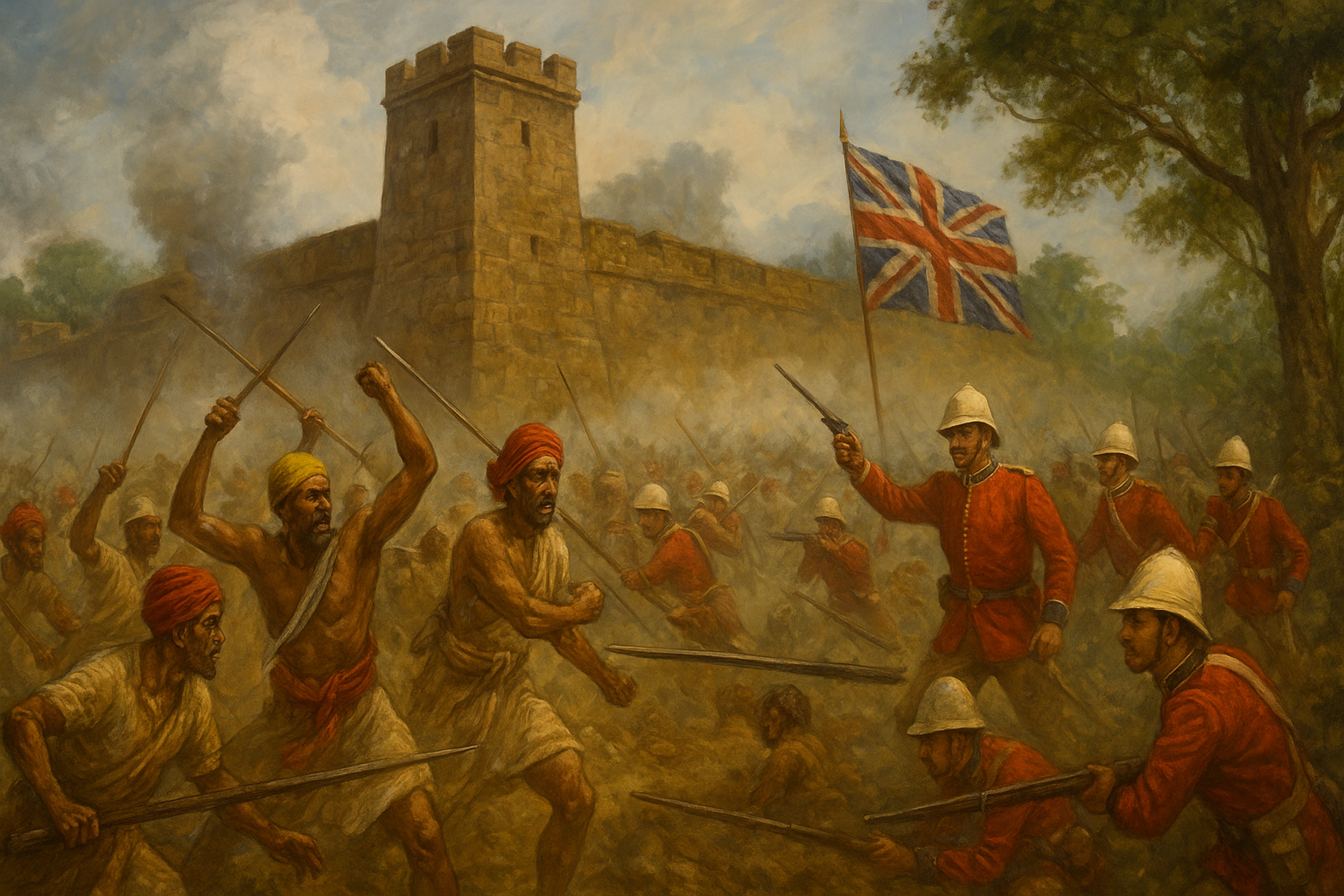
In the early 19th century, Sri Lanka was under the heavy shadow of British colonial rule. The year 1818 marked a period of fierce resistance in the highlands and coastal regions of the island, where the spirit of freedom burned brightly in the hearts of the Sinhalese people.
Among the most remarkable uprisings was the resistance in Wellasse Karalla, a region known for its proud traditions and warrior culture. The Sinhalese here were masters of Angam and Ilangam, traditional martial arts that had been passed down through generations. These fighting systems were not just methods of combat—they were symbols of discipline, courage, and the unbroken spirit of the island’s people.
When the British sought to tighten their control over the region, the people of Wellasse Karalla rose in defiance. Villages united under local leaders, and young warriors trained tirelessly in Angam, the art of hand-to-hand combat, and Ilangam, the swift and precise use of sticks, swords, and other indigenous weapons. Every movement was a dance of strategy, every strike a testament to centuries of martial heritage.
The resistance was fierce. The Sinhalese fighters used the rugged terrain to their advantage, striking swiftly and vanishing into the hills, leaving the British troops bewildered and frustrated. Their knowledge of the land, combined with their mastery of traditional fighting systems, allowed them to resist overwhelming odds.
Though the British ultimately consolidated power in the island, the bravery of the Wellasse Karalla warriors left an indelible mark on history. Their courage became a symbol of national pride, inspiring generations to honor the art of Angam and Ilangam and the enduring spirit of freedom.
Even today, the stories of Wellasse Karalla resonate in Sri Lanka, reminding the nation that skill, unity, and courage can stand against oppression, and that the spirit of resistance can never be extinguished.